 Laser Diode Manufacturer










NEWS
High quality high performance excellent service
Search productSearch post
High quality high performance excellent service
Introduction: The Invisible Degradation
In the operating room, consistency is safety. A surgeon expects that when they dial in 15 Watts, the tip of the fiber delivers 15 Watts. However, over time, medical laser systems often experience “power drift.” Technicians often blame the fiber optic cable, but frequently, the issue lies deeper: inside the diode laser module itself.
Understanding the failure modes of a fiber coupled laser diode is essential for hospital biomedical engineers and third-party repair organizations. It is also crucial information for those looking to laser diode buy for replacement parts—knowing what fails helps you buy better.
The Physics of Failure: Why Modules Die
A fiber laser module is a robust solid-state device, but it is not immune to physics.
The Role of the Fiber Laser Module in High-Power Applications
In dermatology and plastic surgery, power requirements are high. A diode laser module used for body contouring might run at 25W or 30W for an hour continuously. This is a torture test for the internal bonding of the diode bars.
Clinical Case Study: Laser-Assisted Lipolysis (LAL) (Case demonstrating high-power sustained load)
Patient Record: #DERM-LIPO-39 Dept: Plastic & Reconstructive Surgery Patient: Female, 32 years old. Complaint: Localized adiposity in the submental region (double chin) and upper arms, resistant to diet.
Hardware Specification:
- System: Dual-wavelength Fiber Coupled Laser Diode (980nm + 1064nm).
- 980nm: Targets adipocytes (fat cells) to liquefy fat.
- 1064nm: Targets collagen in the dermis to tighten skin.
- Delivery: 600µm bare fiber in a cannula.
Procedure Narrative: The area was infiltrated with Kleins solution. A 1mm incision was made. The cannula containing the fiber was inserted.
- The Engineering Stress: The surgeon activated the fiber laser module at 15W continuous wave. The procedure lasted 45 minutes.
- Performance Check: A key indicator of a quality diode laser module is “Power Slump.” Cheaper modules drop power by 10-15% as they get hot. In this case, the module maintained steady output, ensuring the fat emulsion was consistent throughout the area.
Outcome:
- Result: 150ml of supernatant fat aspirated. Skin retraction was visible immediately due to the 1064nm thermal effect.
- Complications: None. No seroma formation.
- Note: If the laser diode buy decision had prioritized a module without proper Indium bonding, the “hard solder” could have fatigued, causing the laser to shut down mid-surgery.
Diagnostics: Is it the Fiber or the Diode?
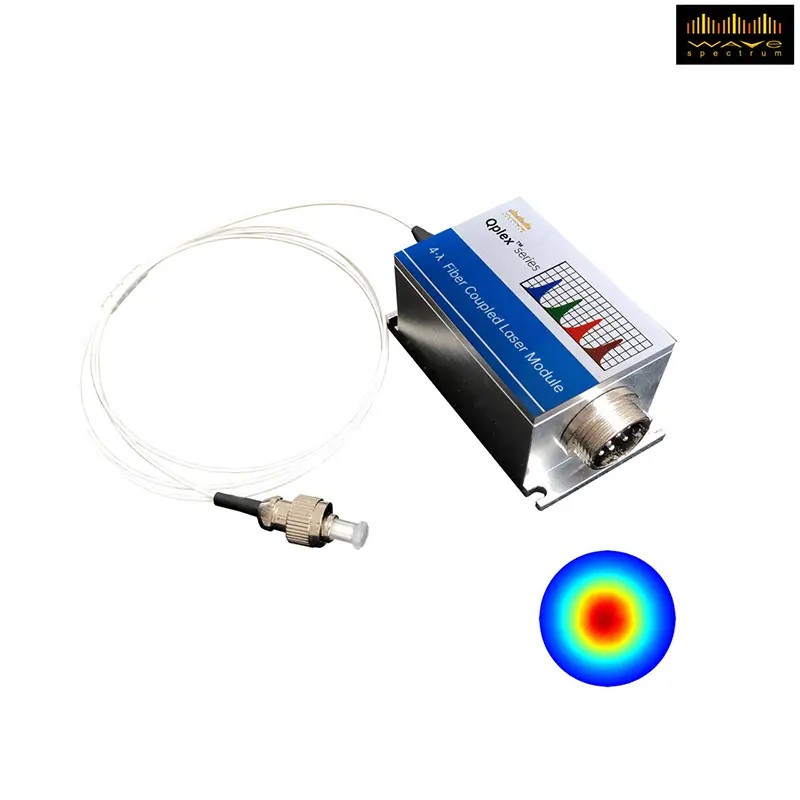
When a system comes in for repair, how do you distinguish a broken fiber from a failing fiber laser module?
Sourcing Replacements: The “Laser Diode Buy” Protocol
For engineers sourcing replacement parts:
Conclusion
The diode laser module is the workhorse of modern minimally invasive surgery. Its ability to couple massive amounts of energy into a tiny fiber allows for surgeries that were previously impossible. For manufacturers, the lesson is clear: verify the coupling stability. For clinics, the lesson is maintenance: regular calibration ensures the fiber coupled laser diode is delivering the dose you think it is.
In the hierarchy of photonic systems, the fiber coupled laser stands as the bridge between raw semiconductor emission and precision application. While the core advantage of a fiber coupled diode laser is often cited as its flexibility or remote de...
View detailsIn the current industrial landscape, the demand for precision beam delivery has moved the spotlight onto the fiber coupled laser diode. While standard diode sources offer high efficiency, the integration of optical fibers transforms a simple light...
View detailsIn the industrial photonics sector, the move toward higher power density is the defining challenge of the decade. While single-mode diodes excel in spatial coherence, the high power fiber coupled laser diode is the engine of the industry, driving ...
View detailsIn the realm of Directed Energy Deposition (DED) and Laser Cladding, the industry has hit a materials wall. While standard infrared (IR) sources handle steel and titanium effortlessly, the surge in demand for copper and gold alloys—driven by the E...
View details