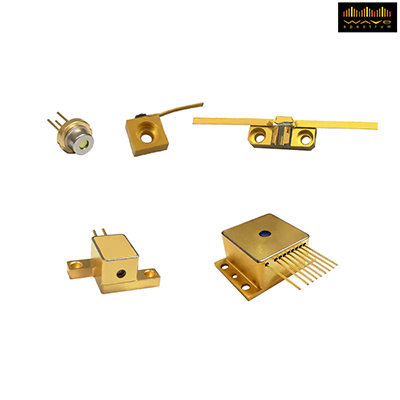
In the competitive landscape of medical device manufacturing, the margin between a “gold standard” device and a recalled product often lies in the component selection. Specifically, the light source. When engineers and clinic owners look to purchase sources, the term fiber coupled laser diode represents the pinnacle of delivery efficiency. Unlike free-space lasers, fiber-coupled units allow for the flexible delivery of energy deep into the human body, revolutionizing fields from vascular surgery to neurosurgery.
However, the market is flooded with varying qualities. Making a smart laser diode buy decision requires looking beyond the price per watt. It requires an understanding of polarization, fiber core diameter, and the critical Numerical Aperture (NA).
Defining the Fiber Laser Module Architecture
What distinguishes a medical-grade fiber laser module from an industrial marker? It is the precision of the coupling. A standard diode laser module emits light with high divergence (the “fast axis”). To get this light into a fiber optic thread that is often thinner than a human hair (200µm – 600µm), sophisticated micro-optics are required.
The Challenge: If the coupling alignment is off by even a micron, the energy heats the cladding (the outer layer of the fiber) rather than traveling down the core.
The Risk: In a medical setting, this “cladding mode” light creates heat at the connector, potentially melting the interface during a surgery.
The Procurement Checklist: What to Ask Manufacturers
Before you finalize a laser diode buy, you must validate three parameters with your supplier:
NA Compatibility: Does the diode’s NA match your delivery fiber? (e.g., A 0.22 NA diode into a 0.22 NA fiber).
Power Stability: Over an 8-hour surgical shift, does the fiber coupled laser diode maintain output, or does it droop?
Wavelength Locking: Does the module include Volume Bragg Gratings (VBG) to lock the wavelength?
Clinical Case Study: Endovenous Laser Ablation (EVLA)(Case demonstrating the necessity of high-quality fiber coupling in vascular surgery)
Patient Record: #VAS-8821 Admitting Dept: Vascular Surgery / Phlebology Patient: Male, 58 years old. Diagnosis: Incompetent Great Saphenous Vein (GSV) – Class C4a (Venous Eczema). Reflux time >0.5s.
Hardware Specification:
Source: 1470nm Fiber Coupled Laser Diode.
Delivery: Radial emission fiber (Ring fiber).
Power Strategy: Linear Endovenous Energy Density (LEED) aimed at 80 J/cm.
Procedure Narrative: Ultrasound guidance was used to map the GSV. Tumescent anesthesia was applied around the vein (hydro-dissection). The optical fiber was inserted via a catheter.
Critical Moment: The surgeon activated the diode laser module. The 1470nm wavelength targets water specifically in the vein wall (endothelium) rather than hemoglobin. This causes collagen shrinkage and vein closure.
The Coupling Factor: Because the fiber laser module had high coupling efficiency (>90%), the energy was delivered strictly radially. A poorer quality module would have leaked heat axially, potentially causing a skin burn or nerve paresthesia.
Outcome:
Immediate: Complete occlusion of the vein confirmed by Doppler.
Follow-up (6 Weeks): No recanalization. Patient reported zero pigmentation (bruising), a direct result of using 1470nm over older 810nm/980nm wavelengths.
#image_title
Why the “Laser Diode Buy” Process is Critical
In the case above, the success hinged on the 1470nm wavelength remaining stable. If the laser diode buy had focused on a cheaper, uncooled module, the wavelength could have drifted to 1480nm or 1490nm as the device heated up. At these drifted wavelengths, the absorption coefficient in water drops significantly, meaning the vein wouldn’t close properly, leading to a failed surgery and recurrence.
Conclusion: The Component is the Treatment
Whether you are building a system for lipolysis, EVLA, or soft tissue surgery, the fiber laser module is the engine. It is not a commodity; it is a precision instrument. Ensure your engineering team tests the coupling efficiency and thermal resistance of every diode laser module before integration.
In the hierarchy of photonic systems, the fiber coupled laser stands as the bridge between raw semiconductor emission and precision application. While the core advantage of a fiber coupled diode laser is often cited as its flexibility or remote de...
In the industrial photonics sector, the move toward higher power density is the defining challenge of the decade. While single-mode diodes excel in spatial coherence, the high power fiber coupled laser diode is the engine of the industry, driving ...
The 980nm single mode fiber coupled laser diode serves as the heartbeat of modern optical communication and precision medical instruments. While other wavelengths are chosen for their specific absorption in tissues or transparency in silica, 980nm...
In high-stakes industrial environments—from aerospace marking to medical device manufacturing—the choice of a light source often dictates the uptime of the entire assembly line. The fiber coupled laser diode has emerged as the preferred solution f...
 Laser Diode Manufacturer