 레이저 다이오드 제조업체








뉴스
고품질 고성능 우수한 서비스
제품 검색게시물 검색
고품질 고성능 우수한 서비스
In the landscape of industrial photonics, the 1064nm laser and its frequency-doubled counterpart, the 532nm laser diode module, form the primary architecture for over 70 percent of precision manufacturing and medical diagnostic tools. This dominance is not accidental; it is rooted in the unique absorption characteristics of materials and the mature engineering ecosystem surrounding neodymium-doped gain media. For an OEM (Original Equipment Manufacturer), selecting a laser source involves more than comparing power outputs on a datasheet. It requires a profound understanding of how the fundamental 1064nm infrared emission is converted, stabilized, and shaped into the visible 녹색 레이저의 파장.
The reliability of a 532 nm laser is fundamentally tied to the quality of its internal components—specifically the 808nm pump diode, the Nd-doped crystal, and the non-linear doubling crystal. When a manufacturer prioritizes component-level integrity, the result is a system that maintains a diffraction-limited beam even under high-duty cycle operations. This article provides a rigorous technical analysis of the engineering hurdles involved in maintaining spectral and spatial stability in these high-precision systems.
The journey to a stable 532 laser begins with the 808nm pump source. In most Diode-Pumped Solid-State (DPSS) systems, the 808nm diode provides the energy required to achieve population inversion in the gain medium (typically Nd:YAG or Nd:YVO4). However, the absorption band of these crystals is remarkably narrow—often less than 2nm to 3nm wide.
만약 1064nm laser manufacturer utilizes sub-standard pump diodes without internal wavelength locking (such as Volume Bragg Gratings or VBG), the output wavelength of the pump will drift significantly as the diode heats up. A typical 808nm diode drifts at a rate of approximately 0.3nm per degree Celsius. Without precise thermal control, the pump wavelength quickly moves outside the crystal’s absorption peak. This leads to wasted energy, increased heat load on the laser head, and a catastrophic drop in the conversion efficiency of the 532nm 레이저.
To mitigate this, high-end industrial systems employ “Locked” diodes. By integrating a VBG into the pump diode package, the manufacturer forces the emission to stay at exactly 808.5nm regardless of minor temperature fluctuations. This engineering choice increases the initial component cost but drastically reduces the complexity of the external cooling system and extends the mean time between failures (MTBF).
The generation of the 532 nm laser wavelength requires a non-linear process where two infrared photons are “fused” into a single green photon. This occurs within a non-linear crystal like KTP (Potassium Titanyl Phosphate) or LBO (Lithium Triborate). The efficiency of this conversion is governed by the phase-matching condition, which states that the refractive index experienced by the 1064nm light must be identical to that experienced by the 532nm light.
Because refractive indices are temperature-dependent, the “conversion window” for a 532nm 레이저 다이오드 module is extremely tight. If the crystal temperature deviates by even 0.5 degrees Celsius, the phase-matching condition is lost, and the green output power can drop by as much as 50 percent.
For manufacturers of 532nm lasers, the design of the “crystal oven”—the mechanical housing that holds the non-linear crystal—is a critical differentiator. A high-rigor design uses oxygen-free high-conductivity (OFHC) copper and precision thermistors capable of millikelvin resolution. This ensures that the wavelength of a green laser remains spectrally pure and power-stable throughout the working day.
In 532 laser systems using KTP crystals, engineers must account for “gray tracking.” This is a phenomenon where localized defects form within the crystal lattice under high-intensity green light, leading to increased absorption and eventual thermal runaway. To prevent this, manufacturers must select “High Power Gray Track Resistance” (HGTR) KTP or opt for LBO crystals in high-average-power applications. LBO, while more expensive and requiring higher operating temperatures for non-critical phase matching, is essentially immune to gray tracking, making it the superior choice for 24/7 industrial production lines.
The following table compares the two most common gain media used to produce 1064nm light for subsequent frequency doubling to 532nm. Understanding these parameters allows OEMs to choose the right engine for their specific application.
| 매개변수 | Nd:YAG (Neodymium-doped Yttrium Aluminum Garnet) | Nd:YVO4 (Neodymium-doped Yttrium Orthovanadate) |
| Absorption Bandwidth | ~1.0 nm (Narrow) | ~15.0 nm (Wide) |
| Stimulated Emission Cross-section | 2.8 x 10^-19 cm2 | 25 x 10^-19 cm2 |
| Thermal Conductivity | 14 W/mK (Excellent) | 5.1 W/mK (Moderate) |
| Fluorescence Lifetime | 230 microseconds | 90 microseconds |
| Output Polarization | Unpolarized (Needs internal optics) | Naturally Polarized |
| 이상적인 애플리케이션 | High Energy Pulsed / Q-Switched | High Repetition Rate / CW |
| SHG Conversion Difficulty | Higher (Due to thermal lensing) | Lower (Due to polarization/gain) |
For applications like micro-machining or flow cytometry, the “focusability” of the laser is as important as its power. The M2 factor (beam quality) defines how close a laser beam is to a perfect Gaussian profile. A perfect beam has an M2 of 1.0.
In a 532nm 레이저 다이오드 module, achieving an M2 < 1.1 requires rigorous control over the “walk-off” effect. In non-linear crystals, the 1064nm and 532nm beams tend to diverge spatially as they pass through the crystal due to birefringence. If not compensated for by using a “walk-off compensated” crystal pair or specific crystal orientations, the resulting green beam will be elliptical rather than circular. This asymmetry makes it impossible to focus the 532nm lasers to the small spot sizes required for precision tasks.
A semiconductor packaging firm was experiencing high rejection rates during the dicing of thin silicon wafers. They were using a standard 1064nm laser, but the thermal side-effects (Heat Affected Zone or HAZ) were causing micro-cracks in the sensitive substrate.
The customer needed to transition to a 532nm laser to take advantage of the higher absorption and reduced thermal footprint of the green wavelength. However, the environment was a high-vibration cleanroom with significant temperature fluctuations from the facility’s HVAC system. The laser needed to maintain a constant pulse energy of 50 micro-joules at a 100 kHz repetition rate with less than 2 percent RMS noise.
To ensure the system met the customer’s vibration requirements, the laser was subjected to a “shaker table” test during the 532 nm laser output calibration. We monitored the pointing stability using a position-sensing detector (PSD). Any deviation greater than 10 micro-radians resulted in a redesign of the internal optical mounts. We replaced standard aluminum mounts with Invar, a nickel-iron alloy with a near-zero coefficient of thermal expansion.
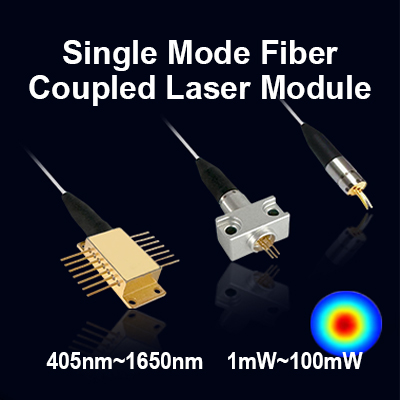
By switching to a precision-engineered 532 laser system with Invar stabilized optics and LBO frequency doubling, the customer reduced their wafer dicing rejection rate from 8 percent to less than 0.5 percent. The stability of the wavelength of a green laser allowed for a consistent “cold ablation” process, proving that for high-stakes industrial applications, the mechanical and thermal architecture of the laser is just as important as the photonics.
When evaluating a 1064nm laser or a 532nm laser diode for purchase, the “sticker price” is often a poor indicator of value. System integrators must consider the “hidden costs” of lower-quality units.
While the DPSS 532nm laser currently offers the best beam quality, there is significant development in direct-emission 520nm-530nm semiconductor diodes. These devices eliminate the need for 1064nm lasers and doubling crystals entirely. However, they currently face limitations in power density and spectral brightness. For the foreseeable future, the high-power industrial market will continue to rely on the frequency-doubled 532nm lasers for their unmatched precision and reliability.
Q1: What determines the “warm-up time” of a 532nm laser diode system?
A: The warm-up time is almost entirely dependent on the thermal mass of the crystal oven and the PID (Proportional-Integral-Derivative) algorithm of the temperature controller. In professional systems, “intelligent” controllers use a fast-ramp phase followed by a fine-tuning phase to achieve the +/- 0.01 degree stability required for the 532 nm laser to reach its peak efficiency without overshooting.
Q2: How does 1064nm back-reflection affect the 532nm output?
A: Back-reflection from a workpiece (especially from metals like copper or gold) can travel back through the optical fiber or beam delivery system into the 1064nm laser cavity. This causes “instability loops” where the power fluctuates wildly. High-quality 532nm lasers include an optical isolator to block these reflections, protecting the internal components from damage.
Q3: Is the wavelength of a green laser exactly 532.0nm in all conditions?
A: Not exactly. While the fundamental 1064nm emission is determined by the crystal lattice, it can shift slightly based on temperature. However, since the SHG process only works efficiently when the phase-matching condition is met, the 532nm output is naturally “filtered” to be very close to the center wavelength. Any significant drift usually results in a loss of power rather than a shift in color.
Q4: Can I use a 532nm laser diode for underwater applications?
A: Yes. One of the reasons 532nm is used in LIDAR and underwater communication is that the wavelength of a green laser falls within the “blue-green window” of minimal absorption in seawater. Compared to a 1064nm laser, which is absorbed almost instantly by water, 532nm light can penetrate dozens of meters.
Q5: What is the significance of “Polarization Ratio” in 532nm lasers?
A: For many applications involving interferometry or holography, a high polarization ratio (typically >100:1) is required. Because the conversion from 1064nm to 532nm is a polarization-dependent process, the quality of the doubling crystal and the gain medium (like Nd:YVO4) ensures that the green output is naturally linear in its polarization.
근적외선(NIR)에서 가시 녹색 스펙트럼으로의 전환은 현대 포토닉스에서 가장 중요한 엔지니어링 과제 중 하나입니다. 제조업체와 시스템 통합업체의 경우 1064nm 사이의 관계를 이해하는 것은 ...
상세 정보 보기현대의 포토닉 환경에서는 소형화에 대한 요구로 인해 동축 광섬유 결합 레이저가 저렴한 통신 부품에서 고정밀 산업 및 의료 기기의 영역으로 확장되었습니다. 역사...
상세 정보 보기현대 광전자공학의 환경에서 광원의 선택은 광자-물질 상호 작용의 기본 물리학에 의해 결정됩니다. 엔지니어와 OEM 설계자의 경우, 선택 프로세스는 종종 특정 전력 요구 사항으로 시작됩니다.
상세 정보 보기최신 레이저 다이오드의 작동 우수성을 이해하려면 거시적인 하우징을 넘어 반도체 헤테로구조의 미시적인 아키텍처를 살펴봐야 합니다. 레이저 다이오드의 핵심은 양자 기계공학의 승리입니다.
상세 정보 보기