 레이저 다이오드 제조업체





뉴스
고품질 고성능 우수한 서비스
제품 검색게시물 검색
고품질 고성능 우수한 서비스
The transition from near-infrared (NIR) to the visible green spectrum represents one of the most significant engineering challenges in modern photonics. For manufacturers and system integrators, understanding the relationship between the 1064nm laser 및 532nm 레이저 다이오드 assembly is not merely a matter of wavelength selection; it is an exercise in managing non-linear physics, thermal dynamics, and precision opto-mechanics.
At the core of this technology lies the principle of frequency doubling. While high-power 1064nm emission is relatively straightforward to achieve via Nd:YAG or Nd:YVO4 mediums, the generation of a stable 532 nm laser requires a sophisticated understanding of Second Harmonic Generation (SHG). This article explores the technical nuances that separate industrial-grade green lasers from consumer-level equivalents, focusing on the component-level integrity that dictates long-term system reliability.
To understand the 녹색 레이저의 파장, one must first analyze the 1064nm fundamental source. In a Diode-Pumped Solid-State (DPSS) architecture, an 808nm 레이저 다이오드 acts as the “pump” source, exciting neodymium ions within a host crystal. The resulting stimulated emission occurs at 1064nm.
However, many applications in dermatology, spectroscopy, and precision machining require the high absorption or visibility of green light. To reach the 532nm threshold, the 1064nm photons must pass through a non-linear optical crystal. This process, governed by the Chi-2 ($\chi^{(2)}$) nonlinearity of the material, forces two 1064nm photons to combine into a single 532nm photon.
그 532 laser is prized because its energy (approximately 2.33 eV per photon) aligns perfectly with the absorption peaks of various hemoglobin types and specific industrial polymers. Unlike the 1064nm wavelength, which penetrates deeply with lower absorption, the 532nm wavelength offers high precision and localized thermal effect. Achieving this consistently requires the laser manufacturer to maintain absolute phase matching within the non-linear crystal, a task that becomes exponentially harder as power levels increase.
When we discuss a 532nm 레이저 다이오드, we are technically referring to a complex module rather than a single semiconductor chip. Unlike red or NIR diodes, which emit directly from a P-N junction, high-power green light is almost exclusively generated through DPSS methods or specialized frequency-doubling of a 1064nm diode source.
The choice of non-linear crystal is the primary driver of both cost and performance.
A manufacturer’s decision to use LBO over KTP is often the difference between a laser that lasts 2,000 hours and one that exceeds 10,000 hours of operation. This choice directly impacts the M2 factor (beam quality) and the stability of the green output.
The following table outlines the critical performance parameters that distinguish professional-grade 532nm 레이저 and their 1064nm laser precursors.
| 매개변수 | 1064nm Industrial Source | 532nm DPSS Module (High Power) | 532nm OEM Diode (Low Power) |
| 파장 허용 오차 | +/- 1.0 nm | +/- 0.5 nm | +/- 2.0 nm |
| Beam M2 Factor | < 1.2 | < 1.3 | < 1.5 |
| 전력 안정성(8시간) | < 1% RMS | < 3% RMS | < 5% RMS |
| 스펙트럼 선폭 | < 0.1nm | < 0.05nm | < 1.0 nm |
| 냉각 요구 사항 | Passive/TEC | Active TEC / Water | Passive/TEC |
| Conversion Efficiency | N/A (Fundamental) | 30% – 55% (SHG) | 151T3PT - 251T3PT |
| Typical MTBF | 20,000시간 | 10,000 – 15,000 Hours | 5,000 Hours |
In the laser industry, the “cheapest” component is frequently the most expensive over the lifecycle of the product. For a system integrator building a medical device, the cost of the 532 laser source is only one variable.
The efficiency of converting 1064nm to 532nm is never 100%. The “lost” energy is converted into heat within the SHG crystal. If the thermal management system is inadequate, the crystal’s refractive index shifts, leading to phase mismatch and a rapid drop in power. A manufacturer that invests in high-purity copper heat sinks and gold-tin (AuSn) bonding for their 532nm 레이저 provides a product that maintains power consistency even in fluctuating ambient temperatures.
Every surface in a 532 nm laser cavity must be coated with high-damage-threshold anti-reflective (AR) or high-reflectivity (HR) thin films. Low-quality coatings absorb a fraction of the circulating 1064nm or 532nm power, leading to localized heating and eventually “catastrophic optical damage” (COD). By analyzing the spectral performance of these coatings, an engineer can predict the longevity of the 레이저 다이오드 module before a single hour of testing is performed.
One of the most persistent issues with the 녹색 레이저의 파장 generated via DPSS is “Green Noise.” This phenomenon is caused by chaotic longitudinal mode hopping within the laser cavity.
For applications like fluorescence microscopy or high-end laser shows, this noise manifests as high-frequency flickering. Eliminating green noise requires either:
Manufacturers who prioritize “Industrial Rigor” will provide detailed noise-spectrum plots (typically showing <1% peak-to-peak noise) rather than just average power ratings.
A leading European manufacturer of aesthetic medical devices was developing a dual-wavelength workstation for treating pigmented lesions and vascular conditions. The device required a switchable output between a 1064nm laser (for deep dermal heating) and a 532nm laser (for superficial pigment).
The primary challenge was the “Cold Start” requirement. Medical practitioners expect the laser to be ready within 30 seconds of powering on. However, the SHG crystal for the 532 nm laser requires precise temperature stabilization (within +/- 0.1°C) to achieve optimal frequency doubling. Furthermore, the system had to fit into a compact, portable chassis with limited airflow.
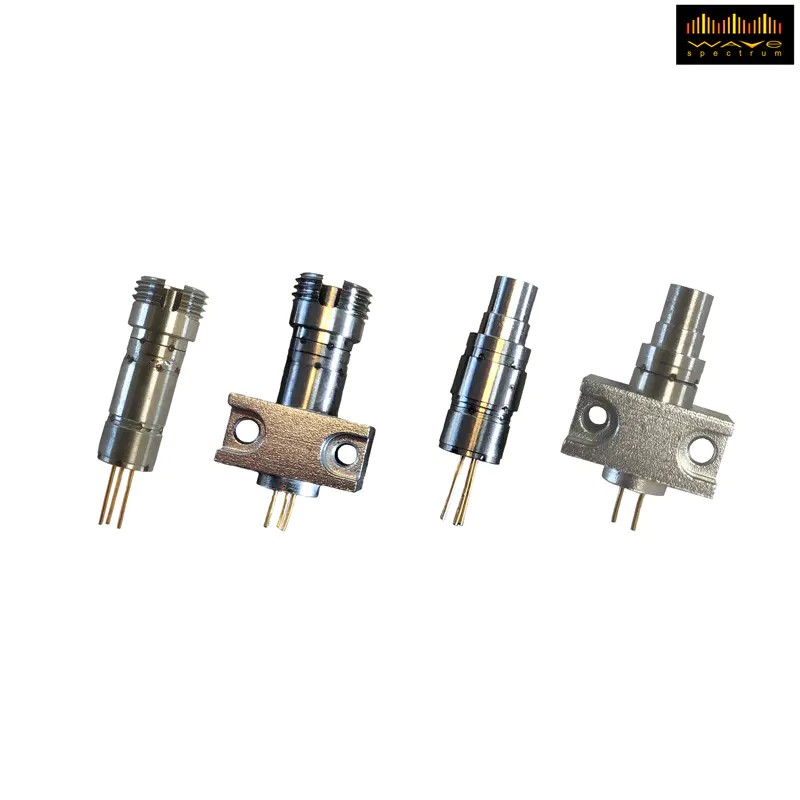
To ensure reliability, the manufacturer implemented a 72-hour burn-in process at 40°C ambient temperature. The QC protocol focused on “Power-to-Current” (L-I) curve linearity. Any deviation in the L-I curve of the 532nm 레이저 indicated a potential misalignment or a sub-standard coating on the KTP crystal.
By opting for a high-stability Nd:YVO4 platform instead of a cheaper Nd:YAG alternative, the OEM achieved a 532nm conversion efficiency of 42%. The thermal management system, utilizing a dual-stage TEC (Thermo-Electric Cooler), allowed the device to reach operational stability in 22 seconds, exceeding the customer’s requirements. This integration proved that focusing on the fundamental physics of the 1064nm laser source is the prerequisite for a high-performing green output.
The industry is currently seeing a shift toward direct-emission green diodes (InGaN based). However, at power levels exceeding 1W, the DPSS 532nm 레이저 다이오드 remains the dominant architecture due to its superior beam quality and spectral purity.
As the 녹색 레이저의 파장 becomes more critical for specialized additive manufacturing (Copper 3D printing, where 532nm absorption is significantly higher than 1064nm), we expect to see a surge in demand for kilowatt-class green laser systems. This will push the boundaries of non-linear crystal growth and require even more stringent optical coating standards.
Q1: Why is 532nm often referred to as a “532nm laser diode” if it uses a crystal?
A: In the industrial and commercial market, “laser diode” often refers to the integrated module. While the primary light source is a diode, the frequency-doubling process is what defines the 532nm output. The term is used to distinguish these compact, efficient modules from older, bulky gas lasers like Argon-Ion.
Q2: Can I run a 532nm laser at varying power levels without affecting the beam quality?
A: This is a common pitfall. Because the SHG process is temperature-dependent, changing the drive current changes the thermal load on the crystal. Without sophisticated “active tracking” of the crystal temperature, the M2 factor and power stability of a 532 nm laser will degrade as you deviate from the factory-calibrated set point.
Q3: What is the main cause of sudden power loss in a 1064nm laser pump?
A: Typically, it is “Facat Damage” on the 808nm pump diode or a shift in the pump wavelength due to aging. If the pump wavelength drifts even 2nm away from the 808nm absorption peak of the Nd:YAG crystal, the 1064nm output will drop significantly, which in turn causes the 532 laser output to fail.
Q4: How does the “wavelength of a green laser” affect fiber coupling efficiency?
A: Shorter wavelengths like 532nm have a smaller spot size (diffraction limit) compared to 1064nm. While this allows for finer focusing, it also requires much tighter mechanical tolerances during fiber alignment. A sub-micron shift in the lens housing can lead to catastrophic coupling loss at 532nm.
산업용 포토닉스 부문에서 더 높은 전력 밀도를 향한 움직임은 10년의 결정적인 과제입니다. 단일 모드 다이오드는 공간 일관성이 뛰어나지만, 고출력 광섬유 결합 레이저 다이오드는 산업을 이끄는 엔진으로, ...
상세 정보 보기반도체 레이저의 환경에서 808nm 레이저 다이오드는 산업 제조와 의료 과학 사이의 가장 중요한 교차점을 차지하고 있습니다. 915nm 또는 980nm와 같은 더 높은 파장은 파이버 레이저 펌핑의 필수품이 되었지만, ...
상세 정보 보기고출력 반도체 포토닉스 분야에서 광대역 레이저 다이오드(BALD)는 고에너지 광자 생성의 주요 수단으로 사용됩니다. 일반적인 용어는 다이오드레이저, 다이오드라 레이저, 그리고 음성...
상세 정보 보기현대의 포토닉스 환경에서 기존의 가스 및 고체 레이저에서 다이렉트 다이오드 시스템으로의 전환은 단순한 트렌드가 아니라 에너지 효율과 시스템 모듈성의 근본적인 변화입니다. 이러한 변화의 핵심은 바로...
상세 정보 보기