 Fabricante de diodos láser








NOTICIAS
Alta calidad, alto rendimiento, excelente servicio.
Buscar productoBuscar publicación
Alta calidad, alto rendimiento, excelente servicio.
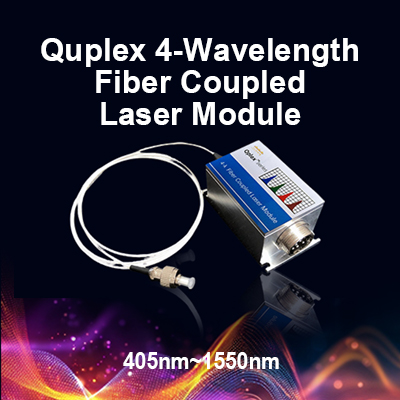
The transition from direct-diode emissions to fiber-delivered delivery systems represents one of the most significant evolutions in photonics. For system integrators and manufacturers, the selection of a diodo láser acoplado a fibra is not merely a procurement decision but a complex engineering trade-off involving beam brightness, thermal dissipation, and long-term spectral stability. Understanding the physics of light injection and the mechanical rigors of micro-optical alignment is essential to distinguishing a high-reliability módulo láser de fibra from a low-cost, high-failure alternative.
At the heart of every láser de diodo módulo lies a semiconductor chip that emits a highly asymmetric and divergent beam. The light emerging from the laser junction is diffraction-limited in the “fast axis” (perpendicular to the junction) but remains highly multi-mode in the “slow axis” (parallel to the junction). This inherent astigmatism poses the primary challenge for a láser acoplado por fibra: how to inject this energy into a circular fiber core while maintaining maximum brightness.
The brightness of a laser source is defined by its power divided by the product of its beam waist and divergence (the Beam Parameter Product, or BPP). When light is coupled into a fiber, the BPP of the system can never be better than the BPP of the source. In fact, due to the mismatch between the rectangular diode emission and the circular fiber geometry, some brightness is always sacrificed.
High-end engineering focuses on minimizing this loss through sophisticated micro-optics. A Fast Axis Collimator (FAC) lens, typically a high-refractive-index acylindrical lens, is positioned within microns of the diode facet. Its role is to reduce the fast-axis divergence from ~40 degrees to less than 1 degree. Subsequently, a Slow Axis Collimator (SAC) and a final focusing objective transform the beam into a spot size that fits within the fiber’s core diameter—typically 105 µm, 200 µm, or 400 µm—with a Numerical Aperture (NA) that matches the fiber’s acceptance angle.
When analyzing the internal construction of a fibra láser de diodo system, the choice of materials dictates the device’s lifespan. The industry distinguishes between “soft solder” (Indium) and “hard solder” (Gold-Tin, or AuSn) technologies.
While Indium is easier to process due to its low melting point and ductility, it is prone to “Indium migration” and “thermal creep” under high-current density. Over thousands of hours, Indium can develop microscopic voids at the solder interface, leading to localized “hot spots” that cause catastrophic optical mirror damage (COMD).
In contrast, high-reliability manufacturers utilize AuSn hard solder on Aluminum Nitride (AlN) or Tungsten-Copper (WCu) submounts. These materials provide an excellent match for the Coefficient of Thermal Expansion (CTE) of the GaAs (Gallium Arsenide) laser chip. By matching the CTE, the engineering team ensures that the chip does not experience mechanical stress during the thousands of thermal cycles inherent in pulsed or modulated operation.
Furthermore, the “pigtailing” process—the permanent attachment of the fiber to the module—must be hermetically sealed. Any ingress of moisture or organic contaminants can lead to “carbonization” at the fiber tip, where the high-power density (often exceeding MW/cm²) burns the contaminants, leading to a permanent loss of power and eventual module failure.
La eficiencia de un módulo láser de diodo is typically between 40% and 60%. The remaining energy is converted into heat. For a 100W module, this means 100W of heat must be removed from a surface area smaller than a postage stamp.
In semiconductor physics, the junction temperature ($T_j$) is the most critical variable. As $T_j$ rises, the bandgap of the semiconductor narrows, leading to a “red shift” in the emission wavelength—typically around 0.3nm per degree Celsius. Furthermore, increased temperature promotes the growth of non-radiative recombination centers (dislocations), which reduces efficiency and accelerates aging.
The “10-degree rule” in photonics suggests that for every 10°C increase in operating temperature, the Mean Time to Failure (MTTF) of the diode is approximately halved. Therefore, the engineering of the cooling block—using micro-channel coolers (MCC) or high-conductivity copper bases—is just as vital as the optical alignment. A manufacturer’s commitment to quality is often visible in the thickness of the gold plating on the baseplate and the precision of the mounting surface’s flatness, which should ideally be within 5 microns to ensure optimal thermal contact with the heat sink.
To achieve superior performance, modern láser acoplado por fibra systems incorporate advanced features beyond simple pigtailing:
Antecedentes del cliente:
A manufacturer of high-end 980nm surgical lasers for endovenous laser ablation (EVLA) was experiencing a 15% field failure rate. The devices were losing power after approximately 300 hours of clinical use, particularly in environments with poor ambient cooling.
Technical Challenges:
Engineering Analysis and Parameters:
Initial testing revealed that the competitor modules used Indium solder and a low-NA fiber (0.15 NA). The high duty cycle caused the Indium to creep, tilting the diode slightly and causing the focused spot to shift off the fiber core. This “stray light” was being absorbed by the epoxy holding the fiber, creating a thermal runaway.
Redesigned Solution:
Quality Control (QC) Protocol:
The new modules underwent a 72-hour burn-in at 45°C ambient temperature at maximum operating current. Any module showing a power drop of >2% or a spectral shift outside of the ±3nm window was rejected.
Resultados:
The field failure rate dropped from 15% to less than 0.2% over a 12-month period. The surgical laser maintained consistent tissue ablation rates regardless of the procedure length, and the “power droop” was eliminated.
The following table illustrates the technical differences between various grades of fiber-coupled modules commonly used in the industry.
| Parámetro | Standard Industrial Grade | High-Performance Pumping Grade | Ultra-High Reliability Medical Grade |
| Center Wavelength (nm) | 915 / 940 / 976 | 976 (VBG Stabilized) | 808 / 980 / 1470 |
| Wavelength Tolerance | ± 10 nm | ± 0.5 nm | ± 3 nm |
| Diámetro del núcleo de fibra | 105 µm / 200 µm | 105 µm | 200 µm / 400 µm |
| Apertura numérica | 0.22 | 0.15 / 0.17 | 0.22 |
| Tipo de soldadura | Indium or AuSn | AuSn | AuSn |
| Thermal Resistance | < 0.8 K/W | < 0.5 K/W | < 0.6 K/W |
| Eficiencia de acoplamiento | 80% – 85% | > 90% | > 88% |
| Typical Lifespan (MTTF) | 10,000 Hours | 20,000 Hours | 25,000+ Hours |
For a system integrator, the initial price of a módulo láser de fibra is only one component of the “Total Cost of Ownership” (TCO). A module that is 20% cheaper but has a 5% higher failure rate in the field will ultimately be more expensive due to:
High-performance engineering focuses on “Margin of Safety.” By over-engineering the thermal dissipation and using superior micro-optics, the module operates well below its physical limits. This conservatism is what separates a tier-one módulo láser de diodo from the rest of the market.
1. Why is 976nm often stabilized with a VBG while 915nm is not?
The 976nm wavelength is used to pump ytterbium-doped fiber lasers, which have a very narrow absorption peak. A slight shift in wavelength causes a massive drop in efficiency. 915nm has a much broader absorption band, making stabilization less critical for efficiency, though it is still used in high-precision applications.
2. Can I use a 105µm fiber if my diode was originally coupled to a 200µm fiber?
Generally, no. A 105µm fiber has a smaller area and often a smaller Numerical Aperture. Attempting to force the same amount of light into a smaller core will result in high losses and likely burn the fiber cladding. Always match the module to the fiber core it was designed for.
3. What is the main cause of “fiber burn” in high-power modules?
The most common cause is “mode mismatch” or mechanical misalignment. If the light enters the fiber at an angle exceeding the NA, or if the spot is larger than the core, the light enters the cladding. Cladding light is not contained and is absorbed by the protective polymers/buffer, which causes heat and eventual combustion.
4. How does the back-reflection from copper affect the diode?
Copper reflects over 90% of IR light at 1 micron. This reflected light can re-enter the fiber, travel backwards, and be focused by the internal micro-optics onto the laser chip’s facet. This causes instantaneous catastrophic damage. Using modules with integrated reflection filters is mandatory for processing non-ferrous metals.
5. Is the “Slow Axis” or “Fast Axis” more difficult to couple?
The Slow Axis is generally more difficult because its beam quality ($M^2$) is much worse. While the Fast Axis can be collimated almost perfectly, the Slow Axis contains many spatial modes that make it difficult to focus into a very small, high-intensity spot.
En entornos industriales de alto riesgo, desde el marcado aeroespacial hasta la fabricación de dispositivos médicos, la elección de una fuente de luz suele determinar el tiempo de actividad de toda la línea de montaje. El diodo láser acoplado a fibra se ha convertido en la solución preferida...
Ver detallesEn el vertiginoso mundo del procesamiento industrial, la frase "el tiempo es oro" es literal. Los fabricantes suelen buscar actualizar su módulo láser de diodo a una potencia superior para aumentar la velocidad de producción. Sin embargo, antes de preguntarse por qué un láser de 100 W no es...
Ver detallesIntroducción: Ver lo invisible En oncología y odontología, la detección temprana es el único indicador que importa. El examen tradicional con luz blanca se basa en la capacidad del ojo humano para discernir cambios morfológicos: un bulto, una decoloración o un...
Ver detallesLa industria moderna depende cada vez más de la precisión de la luz. En la jerarquía de la fotónica, el diodo láser acoplado a fibra es la cumbre de la integración optoelectromecánica. A diferencia de los diodos de emisión direct...
Ver detalles