 Laser Diode Manufacturer








NEWS
High quality high performance excellent service
Search productSearch post
High quality high performance excellent service
To understand the operational excellence of a modern laser diode, one must look beyond the macroscopic housing and into the microscopic architecture of the semiconductor heterostructure. At its core, the laser diode is a triumph of quantum mechanics applied to solid-state physics. Unlike traditional gas or solid-state lasers that rely on bulky optical pumping, the laser diode laser generates light through the direct injection of electrical carriers.
The transition from a simple P-N junction to a sophisticated Double Heterostructure (DH) or Quantum Well (QW) design has been the pivotal shift in the industry. By sandwiching a narrow-bandgap active layer between two wider-bandgap cladding layers, manufacturers can confine both charge carriers (electrons and holes) and the generated photons within a microscopic volume. This confinement is what allows for the high gain and low threshold currents required for high-efficiency laser module integration.
For engineers evaluating a laser diode, the primary metric of quality is not merely the peak power output but the internal quantum efficiency ($eta_{int}$) and the catastrophic optical damage (COD) threshold of the facets. The facet of a semiconductor laser is its most vulnerable point; under high power densities, the localized heat can cause the crystalline structure to melt, leading to instant device failure. Advanced passivation techniques, such as Ion Beam Sputtering (IBS) for facet coating, are no longer optional but a prerequisite for industrial-grade components.
The journey from a raw semiconductor chip to a functional laser module is where many manufacturers fail to maintain technical integrity. A bare laser diode is an inherently divergent light source. Due to the diffraction limit of the small emitting aperture, the beam exits with a fast-axis divergence that can exceed 40 degrees.
Bridging this gap requires high-precision micro-optics. The integration of Fast-Axis Collimators (FAC) and Slow-Axis Collimators (SAC) must be executed with sub-micron accuracy. Any misalignment in the optical train results in a degraded Beam Parameter Product (BPP), which directly impacts the energy density at the focal point. In clinical applications, such as a dental diode laser, a poor BPP translates to inefficient tissue ablation and unwanted thermal collateral damage.
Thermal management serves as the second pillar of module engineering. The “wall-plug efficiency” of a typical diode remains between 30% and 50%, meaning more than half of the input energy is dissipated as heat. In a compact laser module, the heat flux density at the diode junction can be immense. If the Coefficient of Thermal Expansion (CTE) between the diode submount and the heat sink is not matched—typically using materials like Copper Tungsten (CuW) or Aluminum Nitride (AlN)—the resulting mechanical stress will induce wavelength shifting and rapid degradation of the epitaxial layers.
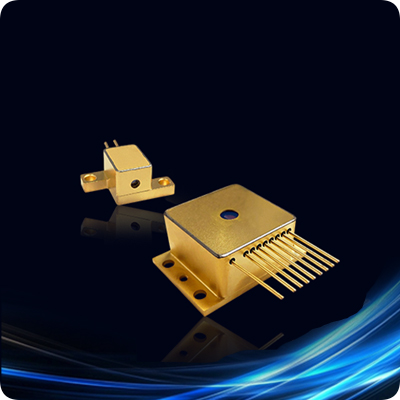
The evolution of the dental diode laser is perhaps the best example of how semiconductor physics meets clinical requirements. The choice of wavelength—typically 810nm, 940nm, or 980nm—is not arbitrary but is dictated by the absorption spectra of target chromophores: melanin, hemoglobin, and water.
However, the technical challenge for the manufacturer lies in “wavelength stability.” As the junction temperature rises, the bandgap of the semiconductor narrows, causing the wavelength to “redshift” (typically 0.3nm per degree Celsius). For a medical OEM, this shift can move the laser out of the optimal absorption peak of the tissue, rendering the treatment less predictable. High-end laser module designs must therefore incorporate Thermoelectric Coolers (TEC) and NTC thermistors to maintain a stabilized operating temperature within $\pm 0.1^{\circ}C$.
In the B2B landscape, the “cost per watt” is a misleading metric if it does not account for the “cost per operational hour.” The procurement of a cheap laser diode often masks hidden costs in the form of high return rates and field failures.
When we analyze the transition from a diode manufacturer to a device integrator, the reliability of the laser diode laser source dictates the warranty liability of the entire machine. A diode that undergoes rigorous “Burn-in” testing (typically 48 to 100 hours at elevated temperatures) will reveal latent defects in the epitaxial growth or mounting process before the component ever reaches the customer. For a dental diode laser manufacturer, using pre-screened, high-reliability modules reduces the need for frequent recalibration of the handpiece, which is a major pain point for clinicians.
The following table outlines the technical parameters that engineers must consider when selecting a diode source for integration into medical and industrial modules.
| Parameter | AlGaAs (780-830nm) | InGaAsP (900-1100nm) | InGaN (405-520nm) |
| Primary Application | Dental Biostimulation, Pumping | Soft Tissue Surgery, Welding | Fluorescence, CTP Printing |
| Wall-Plug Efficiency | 35% – 45% | 45% – 55% | 20% – 30% |
| Typical M² Factor | 1.1 – 1.5 (Single Mode) | 20 – 40 (Multi-Mode) | 1.2 – 2.0 |
| Thermal Shift (nm/°C) | ~0.30 | ~0.35 | ~0.06 |
| COD Threshold | Moderate | High | Very High |
| Common Failure Mode | Dark Line Defects (DLD) | Facet Oxidation | Dislocation Migration |
A European manufacturer of portable dental surgical units was experiencing a 12% failure rate within the first 6 months of product deployment. Their device utilized a 7W 980nm laser module delivered via a 200μm fiber.
The primary issue was identified as “fiber-end retro-reflection.” During surgery, charred tissue or blood on the fiber tip caused back-reflections of the laser energy. This reflected light was re-entering the laser diode cavity, causing localized overheating and catastrophic facet damage. Furthermore, the existing module had poor thermal coupling, leading to a 5nm wavelength drift during continuous 60-second pulses.
Each unit underwent a 72-hour cyclic stress test at $45^{\circ}C$ ambient temperature, with 10,000 on/off cycles to simulate a high-volume clinical environment.
Post-implementation, the client’s field failure rate dropped to <0.5%. The increased stability of the dental diode laser allowed for cleaner tissue cuts with zero carbonization, significantly improving clinical outcomes and the manufacturer’s brand reputation.
Beyond simple power, the spatial quality of the laser diode laser is paramount. In industrial sensing or high-end medical imaging, the Polarization Extinction Ratio (PER) of the laser module can be a critical requirement. A diode naturally emits polarized light, but stress in the mounting process or birefringence in the collimating optics can depolarize the beam. Maintaining a PER of >20dB requires an “anisotropic-stress-free” mounting technique, a level of sophistication that separates component suppliers from true engineering partners.
Furthermore, for applications requiring high brightness, multiple single emitters can be spatially or spectrally combined. By using “step-mirrors” and volume Bragg gratings (VBG), a laser module can achieve power levels previously reserved for fiber lasers, all while maintaining the compact footprint of the diode architecture.
Q1: Why does the spectral width of a laser diode matter in medical applications?
A1: While many believe “narrower is better,” in a dental diode laser, a slightly broader spectral width (e.g., 2-4nm) can actually be beneficial. It reduces the likelihood of constructive interference patterns (speckle) that can lead to “hot spots” in the delivery fiber, which may cause fiber burnout or uneven tissue treatment.
Q2: What is the impact of “droop” in high-power laser modules?
A2: Efficiency droop refers to the decrease in internal quantum efficiency as the injection current increases. This is largely caused by Auger recombination. For the engineer, this means that driving a laser diode at its absolute maximum current is thermally inefficient; it is often better to use a higher-rated diode at 70% capacity to ensure longevity and stable output.
Q3: How does fiber core diameter affect the performance of a laser module?
A3: The fiber core size limits the brightness. A 100μm core allows for much higher power density than a 400μm core. However, smaller cores require much tighter tolerances in the laser diode alignment and FAC/SAC positioning. For dental surgery, a 200μm fiber is generally the optimal balance between flexibility and power density.
Q4: Can a laser diode be repaired if the facet is damaged?
A4: Generally, no. COD (Catastrophic Optical Damage) is a physical melting of the semiconductor crystal. This highlights the importance of choosing a laser module with integrated protection (like VBG or isolators) to prevent back-reflection damage in the first place.
In the pursuit of extreme coherence, the performance of a narrow linewidth laser diode is dictated by the Schawlow-Townes theorem, which relates the spectral width to the photon density within the optical cavity and the Spontaneous Emission Rate. ...
View detailsThe evolution of the modern laser module begins not with a lens or a housing, but within the crystalline lattice of a direct bandgap semiconductor. To understand why a professional Semiconductor Laser outperforms consumer-grade alternatives, one m...
View detailsIn the modern photonic landscape, the requirement for miniaturization has pushed the coaxial fiber coupled laser from a budget-friendly telecommunications component into the realm of high-precision industrial and medical instrumentation. Historica...
View detailsThe evolution of semiconductor photonics has transitioned from simple light emission to the precise manipulation of spectral density. For the technical evaluator, choosing between a DFB Laser Diode and an FP Laser Diode is not merely a matter of c...
View details