 Laser Diode Manufacturer










NEWS
High quality high performance excellent service
Search productSearch post
High quality high performance excellent service
Introduction: The Weakest Link
In the architecture of a medical laser system, the most stressed component is not the power supply or the cooling fan. It is the interface where the photon meets the glass. The fiber coupled laser is a marvel of alignment, tasked with funneling watts of energy into a core barely larger than a human hair.
For engineers and purchasing managers, understanding the failure modes of the laser diode emitter and its fiber interface is critical for reducing RMA (Return Merchandise Authorization) rates. A robust system isn’t just about high power; it’s about the stability of the diode laser fiber coupling under thermal stress.
The Anatomy of the Emitter
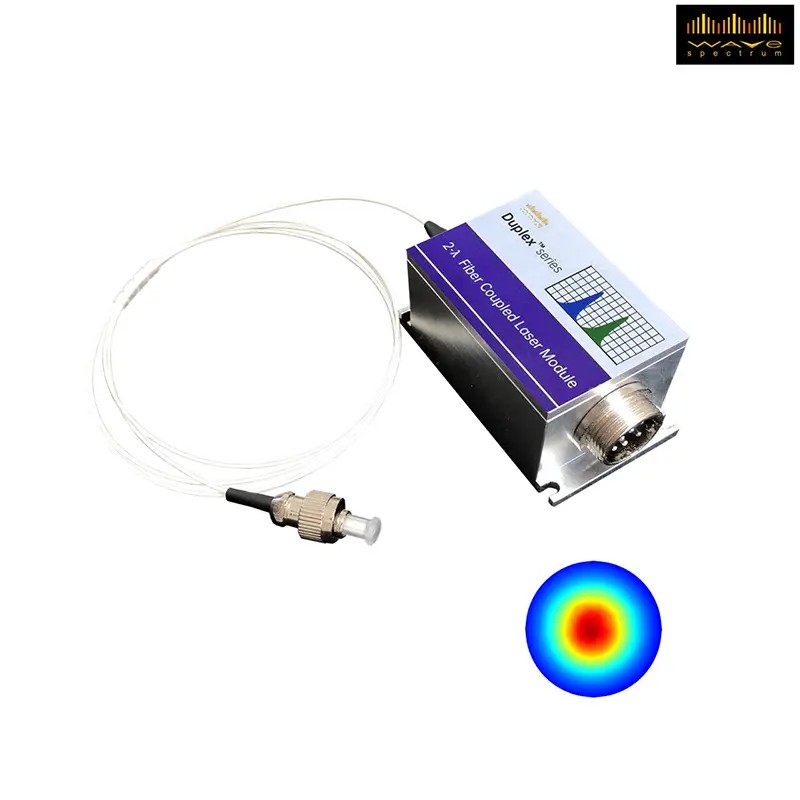
The laser diode emitter is a semiconductor chip (often Gallium Arsenide or Gallium Nitride for UV/Blue). It emits light from a microscopic facet.
If the diode laser fiber shifts by even 2 microns due to thermal expansion, the focus point hits the metal cladding of the fiber connector instead of the glass core. This is called “decoupling.”
The 405nm Challenge
We previously discussed the clinical benefits of the 405nm laser diode. From an engineering standpoint, however, 405nm is a nightmare.
Technical Case Study: Catastrophic Failure in a Urology Laser (Formatted as an Engineering Root Cause Analysis)
Incident Report: #ENG-URO-441 Device: 120W Thulium-doped Fiber Coupled Laser (Pumped by 792nm Diodes). Issue: Sudden loss of output power during lithotripsy (kidney stone breaking). System showed “Diode Over-Current” error.
Tear-Down Analysis: The unit was opened in a Class 100 cleanroom. The pump module—a bank of laser diode emitter bars—was inspected.
- Visual Inspection: The output facet of the diode bar #3 showed severe charring.
- Fiber Inspection: The input face of the diode laser fiber (inside the module) was pitted.
Root Cause Sequence:
- Back-Reflection: The surgeon was firing the laser at a highly reflective kidney stone surface at a perpendicular angle.
- Feedback Loop: High-energy photons were reflected back up the delivery fiber, through the coupling optics, and slammed into the laser diode emitter facet.
- Thermal Runaway: The emitter facet absorbed this reflected energy. The temperature spiked locally to >300°C, melting the semiconductor facet (COD – Catastrophic Optical Damage).
- Debris: Vaporized material from the emitter coated the diode laser fiber input, permanently destroying the coupling efficiency.
Corrective Action: The manufacturer retrofitted the system with an “Inline Optical Isolator.” This component allows light to go out of the fiber coupled laser but blocks light coming back in, protecting the sensitive emitter.
Selecting the Right Diode Laser Fiber
When sourcing replacement fibers or designing a new handpiece, engineers must look at the “Fill Factor.”
Conclusion
Reliability in medical lasers is a game of microns. Whether you are dealing with the delicate optics of a 405nm laser diode or the brute force of a surgical pump, the integrity of the system relies on the fiber coupled laser interface. For manufacturers, rigorous burn-in testing of the coupling is mandatory. For users, the lesson is simple: never treat the diode laser fiber as a simple wire; it is a precision optical component that determines the lifespan of your machine.
The development of the 405nm laser diode represents one of the most significant achievements in III-V semiconductor engineering. Operating at the boundary of the visible violet and near-ultraviolet spectrum, this device relies on Gallium Nitride (...
View detailsThe 405 nm wavelength sits at the strategic intersection of the visible and ultraviolet spectrums. Unlike the more common infrared Gallium Arsenide (GaAs) based emitters, the 405nm laser diode is a product of Gallium Nitride (GaN) semiconductor te...
View detailsIntroduction: Seeing the Invisible In oncology and dentistry, early detection is the only metric that matters. Traditional white-light examination relies on the human eye’s ability to discern morphological changes—a lump, a discoloration, or a les...
View detailsThe industrial demand for high-intensity light has driven the diodelaser from a milliwatt-scale signal device to a multi-kilowatt energy source. In the technical procurement landscape, whether an engineer searches for a diodlaser, a lazer diode, o...
View details