 Produttore di diodi laser









NOTIZIE
Alta qualità, prestazioni eccellenti, servizio eccellente
Cerca prodottoCerca post
Alta qualità, prestazioni eccellenti, servizio eccellente
The clinical efficacy of a sistema laser a diodi per uso medico is often attributed to the optical assembly, yet the true “brain” of the device resides in its drive electronics. In the hierarchy of laser manufacturing, the diode chip is the engine, but the driver is the transmission and fuel injection system. For a laser a diodi chirurgico, the precision of electronic control determines the boundary between successful tissue vaporization and accidental deep-tissue necrosis.
To understand the engineering of these systems, we must first address a common misconception: is a diodo laser simply a specialized LED that can be driven by any high-quality constant current source? The answer is a definitive no. Because of the microscopic scale of the laser’s active region, the device is hypersensitive to nanosecond-scale current transients that would be irrelevant to an LED or an industrial motor.
A laser a diodi per uso medico operates on the principle of stimulated emission, which only occurs once the injection current density exceeds the “threshold current” ($I_{th}$). Above this threshold, the relationship between current and light output is theoretically linear. However, in a real-world laser a diodi chirurgico, this linearity is challenged by two factors: junction heating and carrier density fluctuations.
When a surgeon activates a 1470nm or 980nm sistema laser a diodi per uso medico in “pulsed mode,” the driver must deliver a precise square-wave current. If the driver exhibits “overshoot”—a brief spike where the current exceeds the set point during the rise time—the laser facet can experience instantaneous power densities that exceed the COMD (Catastrophic Optical Mirror Damage) limit. This doesn’t always kill the laser immediately; instead, it creates “latent damage” that causes the laser to fail unexpectedly weeks later in a clinical setting.
In the context of a laser a diodi per uso medico, the mode of delivery dictates the biological response.
In high-power laser a diodi chirurgico systems (operating at 40A to 100A), the physical layout of the electronics becomes a factor of physics. Every centimeter of wire between the driver and the laser diode adds “parasitic inductance.”
When the driver attempts to switch off a 50A current rapidly, this inductance creates a voltage spike ($V = L \cdot di/dt$). Without specialized “snubber” circuits and ultra-low-inductance cabling, this reverse voltage can punch through the P-N junction of the laser a diodi per uso medico, destroying it instantly. This is why “medical grade” systems are often significantly more compact and use specialized PCB trace geometries compared to generic industrial systems.
A high-reliability sistema laser a diodi per uso medico never operates “blind.” It utilizes a dual-loop feedback mechanism:
In un laser a diodi chirurgico, this feedback must be fast enough to react within a single pulse. If a fiber optic cable is bent or damaged, causing back-reflection, the optical loop must trigger a “system shutdown” within milliseconds to prevent the reflected energy from melting the laser’s internal optics.
| Surgical Application | Required Mode | Peak Current | Tempo di salita/discesa | Stability Requirement |
| EVLT (Vein Ablation) | CW / Long Pulse | 5A – 15A | <1 ms | High (±1%) |
| Dental Soft Tissue | Pulsed | 2A – 10A | <50 μs | Moderato |
| Urology (BPH) | High-Power CW | 40A – 100A | <10 ms | Critical (Thermal) |
| Dermatology (Pigment) | Short Pulse | 10A – 30A | <10 μs | High (Peak Power) |
| Oftalmologia | Micro-Pulse | 1A – 3A | <1 μs | Ultra-High |
Background del cliente:
A manufacturer of portable veterinary medical diode laser system units was experiencing a high rate of “tip burnout” on their surgical fibers. The system was a 30W, 980nm unit intended for small-animal soft tissue surgery.
La sfida tecnica:
The client assumed the fiber tips were of poor quality. However, high-speed oscilloscopic analysis revealed that the laser driver was producing a 15% current “overshoot” at the beginning of every pulse. In a 30W setting, the laser was actually “spiking” to 34.5W for the first 50 microseconds of every pulse. This repeated microscopic hammering was degrading the fiber-optic interface and eventually leading to thermal failure of the tip.
Technical Parameter Setting & Engineering Fix:
Quality Control Results:
The “tip burnout” issue was reduced by 95%. Furthermore, the spectral width of the surgical diode laser narrowed by 1.2nm, resulting in more consistent tissue cutting. The client’s field service calls dropped significantly, and the system’s perceived “cutting sharpness” improved according to veterinary feedback.
Conclusione:
This case demonstrates that the “Why” behind mechanical or optical failure is frequently found in the electronic drive parameters. By prioritizing the “Electronic-Photonics Interface,” the manufacturer turned a “unreliable” product into a market leader.
Q1: Is it better to use a “Linear” driver or a “Switching” driver for a surgical diode laser?
A: Linear drivers provide the “cleanest” current with zero ripple, making them ideal for sensitive ophthalmic lasers. However, they are highly inefficient and generate massive heat. For high-power (20W+) medical diode laser systems, “Switching” (Buck/Boost) drivers are necessary for efficiency, but they must be paired with heavy filtering to manage electromagnetic interference (EMI).
Q2: How does the “Duty Cycle” affect the life of a medical diode laser system?
A: The duty cycle (the ratio of “on” time to “off” time) dictates the “Mean Junction Temperature.” A laser running at 100% duty cycle (CW) is under constant thermal stress. A laser running at 10% duty cycle might seem “safer,” but the constant “thermal cycling” (expanding and contracting of the solder joints) can lead to “mechanical fatigue.” Engineering for the intended duty cycle is critical for longevity.
Q3: Can electronic shielding affect the clinical outcome?
A: Indirectly, yes. A surgical diode laser driver that is poorly shielded can emit “Radiated Emissions” that interfere with an EKG or anesthesia monitor in the operating room. If the monitors show “noise,” the surgeon may be forced to stop the procedure, creating a clinical risk.
Q4: What is the “Forward Voltage” ($V_f$) and why does it matter?
A: $V_f$ is the electrical pressure required to push current through the diode. If $V_f$ starts to increase over time at the same current level, it is a leading indicator of “contact degradation” or “solder voiding.” Monitoring $V_f$ is the best way to predict a failure before it happens.
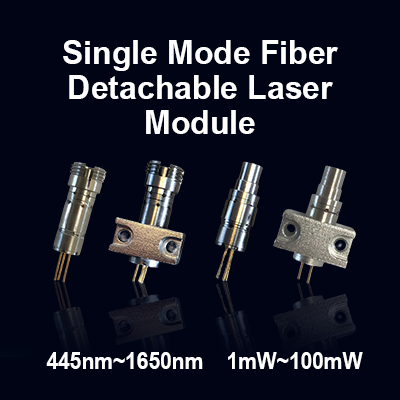
Nell'approvvigionamento di sorgenti ottiche ad alta precisione, la scelta tra un diodo laser pigtail e un modulo laser accoppiato a fibra staccabile si riduce spesso a una questione di costo. Tuttavia, per un ingegnere di sistemi, si tratta di una decisione che riguarda la permanenza...
Visualizza dettagliIntroduzione: La sala macchine dell'odontoiatria Nella nostra precedente discussione (Il vostro studio dentistico sta perdendo l'opportunità della precisione dei diodi?), abbiamo esaminato i risultati clinici della chirurgia laser. Ma per gli ingegneri di dispositivi medici, i tecnici biomedici e gli O...
Visualizza dettagliIntroduzione: Oltre la scheda tecnica Nel panorama competitivo della produzione di dispositivi medici, il margine tra un dispositivo "gold standard" e un prodotto ritirato dal mercato risiede spesso nella scelta dei componenti. In particolare, nella sorgente luminosa. Quando si progetta...
Visualizza dettagliIntroduzione: Il degrado invisibile In sala operatoria, la coerenza è sinonimo di sicurezza. Un chirurgo si aspetta che, quando imposta 15 Watt, la punta della fibra eroghi 15 Watt. Tuttavia, con il passare del tempo, i sistemi laser medicali spesso subiscono una "diminuzione di potenza"...
Visualizza dettagli