 Laser Diode Manufacturer











NEWS
High quality high performance excellent service
Search productSearch post
High quality high performance excellent service
The relentless demands of modern industry—from aerospace to ship repair—require surfaces to be impeccably clean, free of rust, paint, and contaminants before welding, coating, or inspection. For generations, this crucial step relied on abrasive blasting, toxic chemicals, or manual grinding, all of which are environmentally hazardous, labor-intensive, and often damaging to the underlying substrate. Today, a quieter, cleaner revolution is underway, powered by the compact efficiency of the laser diode. This solid-state light source, integrated within a powerful laser module, is the engine of next-generation industrial cleaning systems, collectively known as the laser diode laser cleaning solution.
The fundamental question is whether this non-contact, high-precision technique can truly replace the sheer brute force of traditional methods across heavy industry, particularly when handling massive structures or persistent contaminants like heavy rust and tenacious paint layers. The answer lies not just in the power, but in the sophisticated control of the laser diode laser pulse, which allows for selective material removal at a speed and precision previously unattainable. This article will thoroughly explore the principles of laser ablation, detail the engineering behind the industrial laser module, and present a compelling case study on how a pulsed laser diode laser system successfully optimized critical infrastructure maintenance, proving its viability as the future of non-destructive cleaning.
At the heart of the cleaning revolution is the physical phenomenon of laser ablation. Unlike grinding or chemical stripping, laser cleaning utilizes the high-peak power pulses emitted by the laser diode laser to selectively remove layers of unwanted material.
The process is highly selective, relying on the difference in absorption coefficients between the contaminant (e.g., rust, paint) and the substrate (e.g., steel, aluminum). The laser diode emits a specific wavelength—often near-infrared—that is strongly absorbed by the surface layer, causing the material to rapidly heat and instantaneously sublime or vaporize without significantly raising the temperature of the non-absorbent substrate.
This contact-free process virtually eliminates the risk of substrate damage, micro-pitting, and surface deformation—common issues associated with mechanical and abrasive methods.
The shift from low-power laser diodes used in sensing to multi-kilowatt pulsed cleaning systems requires an extremely robust and precisely controlled laser module. This integrated module is what turns raw light into a highly functional industrial tool.
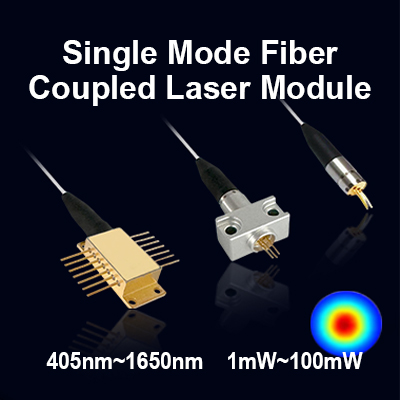
The reliability and portability of the modern laser diode laser cleaning machine—often delivered in a rugged, mobile cabinet—are testaments to the robustness achieved by integrating state-of-the-art laser module technology. This portability allows the technology to be deployed not just on the production line, but also in the field for maintenance and restoration.
Can a laser diode laser system effectively manage corrosion on aged, large-scale infrastructure while protecting its integrity? The maintenance of critical national infrastructure, like oil and gas pipelines, presents one of the most demanding cleaning challenges.
The successful deployment of laser diode laser cleaning in critical infrastructure maintenance, as demonstrated in the TAPS case, confirms that the technology is far more than an ecological alternative—it is a performance upgrade.
The future of industrial cleaning, driven by the ever-improving power and lifespan of the laser diode, will focus on full automation and even higher pulsed power levels. Autonomous robots equipped with compact, high-energy laser modules will soon perform routine hull cleaning on ships, remove radioactive contaminants in nuclear facilities, and instantly prepare large metal components for welding, all without human intervention in hazardous environments. The non-contact nature, coupled with the precision of the laser diode laser, ensures that this technology is the definitive choice for maintaining material integrity while driving efficiency and sustainability across all heavy industries.
In the realm of Directed Energy Deposition (DED) and Laser Cladding, the industry has hit a materials wall. While standard infrared (IR) sources handle steel and titanium effortlessly, the surge in demand for copper and gold alloys—driven by the E...
View detailsThe journey of a high-performance semiconductor light source begins long before the final assembly in a China laser diode factory. It starts with the calculation of the Schrödinger equation within the context of a periodic crystal potential. To fu...
View detailsIn the competitive world of aesthetic medicine—specifically hair removal and vascular treatments—equipment downtime is the silent killer of profitability. For years, the industry standard was the heavy, water-cooled vertical stack handpiece. These...
View detailsIn the modern photonic landscape, the requirement for miniaturization has pushed the coaxial fiber coupled laser from a budget-friendly telecommunications component into the realm of high-precision industrial and medical instrumentation. Historica...
View details