 Laser Diode Manufacturer











NEWS
High quality high performance excellent service
Search productSearch post
High quality high performance excellent service
The evolution of semiconductor photonics has transitioned from simple light emission to complex spatial and spectral control. For engineers and system integrators, selecting a laser diode module is no longer a matter of mere milliwatts; it is an exercise in managing carrier injection efficiency, thermal impedance, and high-speed modulation stability. As we push the boundaries of brightness in the infrared spectrum, the synergy between the laser diode and driver becomes the definitive factor in operational longevity and beam quality.
To understand the modern infrared laser module, one must look beyond the copper housing. The performance of an ir laser module is fundamentally limited by the catastrophic optical damage (COD) threshold of the semiconductor facet and the heat dissipation capabilities of the submount. In high-power applications, particularly those ranging from 808nm to 980nm, the transition from single-emitter TO-can packages to complex fiber-coupled or multi-emitter arrays represents a shift in thermal philosophy.
A high-performance module utilizes a “junction-down” mounting technique. By placing the active region of the chip closer to the heat sink—often a micro-channel cooler or a high-thermal-conductivity AlN (Aluminum Nitride) ceramic—we minimize the thermal resistance ($R_{th}$). This is critical because the wavelength of an infrared laser typically shifts by approximately 0.3nm per degree Celsius. Without precise thermal control, the spectral broadening renders the module useless for applications like solid-state laser pumping or Raman spectroscopy.
The relationship between the laser diode and driver is often the weakest link in industrial laser systems. A laser diode is a low-impedance device that is extremely sensitive to current transients. A nanosecond spike in forward current, even if it doesn’t exceed the average power rating, can cause localized melting of the quantum well structures.
Advanced drivers must implement a “soft-start” mechanism and rigorous Over-Current Protection (OCP). In pulsed mode operations, such as LiDAR or material processing, the driver’s ability to maintain a clean square wave with minimal overshoot is paramount. High-speed switching induces parasitic inductance in the leads connecting the driver to the module. To mitigate this, modern laser diode module designs favor integrated driver-on-board architectures, where the proximity of the storage capacitors to the diode reduces impedance and allows for rise times in the picosecond range.
The performance of an ir laser module is dictated by the epitaxial growth of the semiconductor wafers. Utilizing MOCVD (Metal-Organic Chemical Vapor Deposition), engineers create strained-layer quantum wells that enhance the gain coefficient while reducing the threshold current density ($J_{th}$). In the infrared spectrum, particularly for 1450nm to 1550nm modules used in “eye-safe” rangefinding, the use of InP (Indium Phosphide) substrates introduces unique challenges compared to standard GaAs (Gallium Arsenide) platforms.
The packaging of these chips involves Gold-Tin (AuSn) hard solder. Unlike soft lead-based solders, AuSn prevents “solder creep,” a phenomenon where the interface material migrates under thermal cycling, eventually causing mechanical stress on the chip and leading to premature failure. This is especially vital for the laser diode module used in 24/7 industrial production lines.
A Tier-1 aerospace component integrator required a high-brightness 915nm laser diode module system for localized laser cladding of turbine blade tips. The requirement was a consistent 200W output into a 135μm fiber core with a Numerical Aperture (NA) of 0.22, operating in a high-vibration environment.
The primary hurdle was the spatial multiplexing of multiple 20W emitters into a single fiber while maintaining a high power density. Furthermore, the laser diode and driver setup needed to handle rapid modulation (up to 10kHz) to control the heat-affected zone (HAZ) on the superalloy substrate. Thermal crosstalk between the closely packed emitters threatened to destabilize the wavelength, causing a mismatch with the absorption spectrum of the cladding powder.
The solution involved a multi-emitter module using a step-cell design where each emitter is height-offset to allow for individual collimation via Fast-Axis Collimators (FAC) and Slow-Axis Collimators (SAC).
| Parameter | Value | Unit |
| Center Wavelength | $915 \pm 3$ | nm |
| Output Power | 215 | W |
| Fiber Core Diameter | 135 | μm |
| Numerical Aperture | 0.18 (at 95% energy) | NA |
| Threshold Current | 0.8 | A |
| Operating Current | 12.5 | A |
| Slope Efficiency | 1.15 | W/A |
After 5,000 hours of continuous accelerated life testing (ALT) at an elevated baseplate temperature of 45°C, the module showed a power degradation of less than 2.4%. The integrated laser diode and driver system maintained a pulse-to-pulse stability of <1% RMS. The resulting cladding layers exhibited zero porosity and a refined grain structure, validating the precision of the infrared laser delivery.
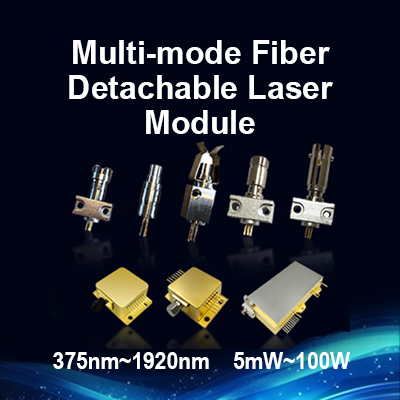
For many ir laser module applications, such as spin-exchange optical pumping (SEOP) or gas sensing, the natural 3-5nm linewidth of a diode is too broad. To address this, we employ Volume Bragg Gratings (VBG). By placing a VBG in the external cavity of the laser diode module, we can “lock” the wavelength to a specific peak with a FWHM (Full Width at Half Maximum) of less than 0.5nm.
This wavelength locking not only improves spectral purity but also stabilizes the power output against temperature fluctuations. Since the grating determines the feedback frequency rather than the semiconductor’s bandgap alone, the $d\lambda/dT$ coefficient can be reduced from 0.3nm/°C to as low as 0.05nm/°C. This eliminates the need for bulky, power-hungry thermoelectric coolers (TEC) in certain portable applications.
This is primarily due to Common Mode Noise and Ground Loops. When a laser diode and driver share a ground path with inductive loads like motors, the back-EMF (Electromotive Force) can create transient voltage spikes. Since a laser diode is a PN junction with a very low breakdown voltage in reverse bias (often as low as 2V), these spikes can cause immediate catastrophic failure. Isolation via optocouplers or dedicated floating power supplies is mandatory for industrial integration.
The “Smile Effect” refers to the vertical misalignment or bowing of the emitters in a laser bar due to mechanical stress during the soldering process. In an infrared laser module, even a 1μm “smile” can significantly degrade the brightness when attempting to couple the light into a small-diameter fiber. Using hard solders (AuSn) and optimized CTE (Coefficient of Thermal Expansion) matched submounts like Copper-Tungsten (CuW) is the standard engineering fix to ensure a linear emitter profile.
The 1550nm wavelength falls within the “Retina Safe” zone of the IR spectrum. The human eye’s vitreous humor absorbs light at this wavelength before it reaches the retina, allowing for much higher pulse energies (up to $10^4$ times higher) compared to 905nm or 980nm. This makes the 1550nm ir laser module the preferred choice for long-range LiDAR and open-air communications where eye safety is a regulatory constraint.
It depends on the duty cycle and the required spectral stability. If your laser diode and driver are used for simple thermal applications (like plastic welding), a passive heat sink may suffice. However, for any application involving fiber coupling or precise absorption (like pumping a Nd:YAG crystal), the lack of active cooling will lead to wavelength drift and potential thermal runaway.
The next frontier in laser diode module technology is the integration of “Smart Drivers.” These drivers use real-time telemetry—monitoring forward voltage ($V_f$), leakage current, and back-facet monitor photodiode signals—to predict the “End of Life” (EOL) of the module. By utilizing machine learning algorithms, the driver can subtly adjust the operating parameters to compensate for aging, effectively extending the usable life of the ir laser module in critical medical or aerospace missions.
In the realm of high-power photonics, the distinction between the light source and the electronics is blurring. A truly robust system treats the laser diode and driver as a single, symbiotic organism, where thermal, electrical, and optical domains are managed in a closed-loop environment. As we move toward higher power densities and smaller footprints, the engineering focus remains steadfast on one goal: the uncompromising control of photons.
In the field of high-power semiconductor photonics, the Broad Area Laser Diode (BALD) stands as the primary vehicle for high-energy photon generation. While the general terminology often alternates between diodelaser, diodlaser, and the phonetic v...
View detailsIn the contemporary landscape of photonics, the transition from traditional gas and solid-state lasers to direct diode systems is not merely a trend—it is a fundamental shift in energy efficiency and system modularity. At the heart of this evoluti...
View detailsThe architecture of a Multi-mode Laser Diode is fundamentally designed to circumvent the power limitations inherent in single-mode structures. While a single-mode diode is constrained by a narrow waveguide to maintain a $TEM_{00}$ spatial profile,...
View detailsThe industrial transition toward direct diode lasers and high-power pumping systems has placed an unprecedented focus on the fundamental building block of photonics: the semiconductor laser chip. While total output power is often the primary metri...
View details