 Hersteller von Laserdioden











NEWS
Hohe Qualität, hohe Leistung, exzellenter Service
Produkt suchenBeitrag suchen
Hohe Qualität, hohe Leistung, exzellenter Service
In the spectral landscape of photonics, the 1550nm wavelength represents the “Golden Window” for long-range and high-precision optical systems. This preference is not arbitrary; it is dictated by the fundamental physical properties of silica-based glass. Within the 1550nm fiber ecosystem, the attenuation reaches its theoretical minimum, approximately 0.2 dB/km, primarily due to the balance between Rayleigh scattering, which decreases with the fourth power of wavelength, and infrared absorption from molecular vibrations.
For engineers developing advanced sensing or communication hardware, the transition from shorter wavelengths (such as 850nm or 1310nm) to 1550 nm fiber systems is driven by more than just low loss. At 1550nm, the light is “eye-safe” at significantly higher power levels compared to the visible spectrum because the ocular fluid absorbs the energy before it can reach the retina. This allows for higher-power emission in LIDAR and remote sensing applications. However, the move to 1550nm necessitates a complete shift in material science, moving from Silicon-based detectors to Indium Gallium Arsenide (InGaAs) for the fiber-coupled optical receiver, and complex ternary or quaternary semiconductor alloys for the light sources.
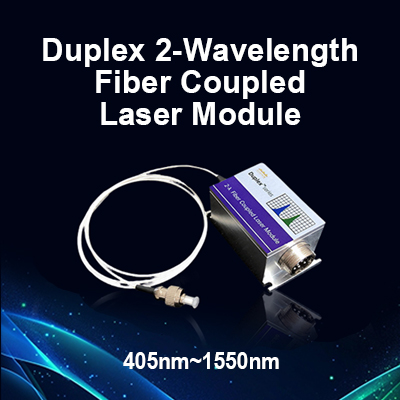
The core of any signal recovery system in the C-band is the fiber-coupled optical receiver. Unlike bulk optics detectors, a fiber-coupled module must efficiently interface the sub-10-micrometer core of a single-mode fiber with a semiconductor active area. This interface is where the most significant signal-to-noise ratio (SNR) challenges occur.
The detection mechanism in an InGaAs PIN photodiode relies on the internal photoelectric effect. When a photon with energy $E = h\nu$ strikes the intrinsic region of the semiconductor, it must have sufficient energy to bridge the bandgap $E_g$. For InGaAs, this bandgap is engineered to be approximately 0.75 eV, making it highly sensitive to the 1.0 to 1.7 micrometer range.
The responsivity $R$ of the receiver is a critical metric, defined as:
$$R = \frac{\eta q}{h \nu} = \frac{\eta \lambda}{1.24}$$
Where $\eta$ is the quantum efficiency, $q$ is the electron charge, and $\lambda$ is the wavelength in micrometers. In a high-quality fiber-coupled optical receiver, the quantum efficiency often exceeds 80%, leading to responsivity values greater than 0.9 A/W at 1550nm. However, high responsivity is useless if the noise floor is too high.
From a component quality perspective, the “Dark Current” ($I_d$) is the primary enemy of precision. This is the residual current that flows through the receiver even in total darkness. Dark current is a function of the semiconductor growth quality; defects in the InGaAs lattice create intermediate energy states that facilitate thermal generation of carriers.
Furthermore, the “Active Area” size of the receiver presents a trade-off. A larger active area (e.g., 500 micrometers) makes fiber alignment easier but increases the parasitic capacitance. High capacitance acts as a low-pass filter, severely limiting the bandwidth of the system. In high-speed 1550 nm fiber systems, engineers must select receivers with the smallest possible active area that can still reliably capture the fiber’s divergent output, typically necessitating precision aspheric lenses inside the receiver package.
While laser diodes provide high power and coherence, the fiber pigtailed led remains indispensable for applications requiring low temporal coherence and high stability, such as Optical Coherence Tomography (OCT) or certain types of fiber optic gyroscopes.
The primary engineering hurdle for a fiber pigtailed led is the “Etendue” or the conservation of the “area-solid angle product.” LEDs are Lambertian emitters, meaning they emit light over a wide 180-degree hemisphere. Coupling this diffuse light into a single-mode 1550nm fiber with a numerical aperture (NA) of approximately 0.14 is inherently inefficient.
To overcome this, manufacturers employ “Edge-Emitting LED” (ELED) or “Superluminescent LED” (SLED) architectures. Unlike standard surface-emitting LEDs, an ELED confines the light to a narrow junction layer, similar to a Laserdiode but without the optical feedback mirrors. This results in a more directional beam that can be captured by micro-optics and launched into the fiber pigtail. The quality of the fiber pigtailed led is thus judged by its “Coupled Power” rather than its total luminous flux.
One distinct advantage of the fiber pigtailed led at 1550nm is its broad spectral width (typically 30nm to 100nm). In sensing applications, this broad spectrum reduces “speckle noise” and interference artifacts. However, in the context of 1550 nm fiber transmission, this breadth leads to significant chromatic dispersion. Different wavelengths within the LED’s spectrum travel at different speeds through the fiber, causing pulse broadening. For this reason, pigtailed LEDs are favored for short-to-medium range sensing rather than long-haul telecommunications.
When sourcing components like a fiber-coupled optical receiver oder eine fiber pigtailed led, buyers often focus on the “Price per mW” or “Price per unit.” However, in industrial and medical fields, the true cost is determined by the “Cost of Failure.”
A low-quality fiber-coupled module often utilizes epoxy-based alignment. Over time, thermal cycling causes the epoxy to expand and contract, leading to “alignment drift.” A shift of just 2 micrometers in the fiber position relative to the detector can result in a 3dB (50%) loss in signal. If this occurs in a buried infrastructure sensor or a surgical laser system, the cost of repair or recalibration far exceeds the initial savings of the component.
By contrast, professional-grade modules utilize laser-welded “butterfly” or “TO-can” packages. Laser welding creates a permanent, inorganic bond that is immune to outgassing and moisture ingress. This ensures that the 1550nm fiber interface remains stable over decades of operation.
Kundenhintergrund:
A manufacturer of industrial gas safety systems required a remote sensing solution to detect methane leaks at a distance of 2 kilometers using existing 1550 nm fiber infrastructure.
Technische Herausforderungen:
Methane has a specific absorption line near 1650nm, but the system used the 1550nm “side-band” for reference. The challenge was the extremely low return signal from the remote gas cell. The system required:
Technische Parameter und Einrichtung:
Lösung für die Qualitätskontrolle (QC):
Every fiber-coupled optical receiver was subjected to a “Dark Current vs. Temperature” sweep from -20°C to +70°C. Modules showing exponential dark current growth—indicative of lattice impurities—were rejected. The pigtailed LEDs underwent a 168-hour “Accelerated Aging” test at maximum rated current to stabilize the spectral output.
Schlussfolgerung:
By utilizing a high-responsivity, low-noise fiber-coupled optical receiver, the client was able to achieve a detection limit of 50 ppm (parts per million) for methane over a 2km fiber run. The use of laser-welded pigtails ensured that the system required zero recalibration over its first two years of outdoor deployment in a volatile refinery environment.
The following table outlines the performance differences between standard and high-performance receiver components used in 1550 nm fiber systems.
| Spezifikation | Standard InGaAs PIN | High-Speed PIN-TIA | Avalanche Photodiode (APD) |
| Spectral Range | 1100 – 1700 nm | 1100 – 1650 nm | 1260 – 1620 nm |
| Responsivity | 0.85 – 0.95 A/W | 0.90 A/W | 8 – 10 A/W (M=10) |
| Dark Current | 0.5 – 2.0 nA | 1.0 – 5.0 nA | 10 – 50 nA |
| Bandwidth | 100 – 500 MHz | 1 – 10 GHz | 1 – 2.5 GHz |
| NEP (Typical) | $10^{-14} \text{ W/Hz}^{1/2}$ | $10^{-13} \text{ W/Hz}^{1/2}$ | $10^{-15} \text{ W/Hz}^{1/2}$ |
| Kupplungstyp | Fiber Pigtail | Fiber Pigtail | Receptacle / Pigtail |
| Typische Anwendung | Power Monitoring | Data Comms | Long-range LIDAR |
Q1: Why is InGaAs used instead of Silicon for 1550nm receivers?
Silicon has a bandgap of approximately 1.1 eV, which means it can only absorb photons with wavelengths shorter than 1100nm. At 1550nm, silicon is transparent. InGaAs has a lower bandgap (approx. 0.75 eV), allowing it to efficiently convert 1550nm photons into electrons.
Q2: What is the difference between a “pigtailed” and a “receptacle” module?
A fiber pigtailed led or receiver has a length of optical fiber permanently attached and aligned to the internal chip. This offers the lowest insertion loss and highest stability. A receptacle module has a connector (like LC or FC) built into the housing, allowing the user to plug in their own cable, which offers more flexibility but higher potential for contamination and loss.
Q3: How does temperature affect a 1550 nm fiber receiver?
As temperature increases, the thermal energy allows more electrons to jump the bandgap without light stimulus, increasing the “Dark Current.” This effectively raises the noise floor of the system. High-performance fiber-coupled optical receivers often include an internal thermistor to monitor this effect or a TEC to stabilize the temperature.
Q4: Can a fiber pigtailed led be used for high-speed data transmission?
Only at relatively low speeds (typically <622 Mbps). Because LEDs have a wide spectral width, chromatic dispersion in the 1550nm fiber causes the signal to smear over long distances. For high-speed or long-distance data, a Laser Diode (LD) is required due to its narrow linewidth.
Q5: What is the significance of the “PIN” in PIN photodiode?
PIN stands for P-type, Intrinsic, N-type. The “Intrinsic” layer is a wide, undoped region between the P and N layers. This increases the volume where photons can be absorbed and reduces the junction capacitance, allowing for both higher sensitivity and faster response times compared to a standard PN junction.
Die Auswahl einer Halbleiter-Lichtquelle für hochpräzise industrielle oder medizinische Anwendungen wird von der Schnittstelle zwischen Quantenphysik und thermomechanischer Technik bestimmt. Eine allgemeine Suche nach einem zu verkaufenden Laser könnte zwar zahlreiche...
Details anzeigenIn der wettbewerbsintensiven Welt der ästhetischen Medizin – insbesondere bei Haarentfernungs- und Gefäßbehandlungen – sind Ausfallzeiten der Geräte der stille Killer der Rentabilität. Jahrelang war das schwere, wassergekühlte vertikale Handstück der Industriestandard. Das...
Details anzeigenDer Übergang vom nahen Infrarot (NIR) zum sichtbaren grünen Spektrum stellt eine der größten technischen Herausforderungen in der modernen Photonik dar. Für Hersteller und Systemintegratoren ist das Verständnis der Beziehung zwischen dem 1064nm ...
Details anzeigen