 مُصنِّع الصمام الثنائي الليزري









أخبار
خدمة ممتازة عالية الجودة وعالية الأداء
البحث عن منتجالبحث عن منشور
خدمة ممتازة عالية الجودة وعالية الأداء
At the frontier of modern photonics, the role of a مُصنِّع الصمام الثنائي الليزري has evolved from a simple component fabricator to a guardian of quantum precision. To understand the value of a high-tier diode laser supplier, one must first address the fundamental physics governing the p-n junction under high injection levels. The transition from spontaneous emission to stimulated emission is not merely a toggle of current; it is a delicate balance of carrier density, optical gain, and resonator losses.
In a standard Fabry-Pérot ليزر أشباه الموصلات, the active region—typically composed of strained quantum wells—must be engineered to maximize the overlap between the optical field and the gain medium. This is known as the confinement factor. A sophisticated China laser diode factory utilizes Metal-Organic Chemical Vapor Deposition (MOCVD) to grow epitaxial layers with atomic-layer precision. The introduction of “strain” into the lattice—intentionally mismatching the crystal constants of the active layer and the substrate—allows engineers to modify the band structure. This modification reduces the transparency current density and suppresses Auger recombination, which is the primary non-radiative loss mechanism in long-wavelength diodes.
When designing a custom laser diode module, the manufacturer must account for the “Gain-Switching” dynamics. For nanosecond pulsed applications, such as LiDAR or time-of-flight sensing, the carrier lifetime and the photon lifetime within the cavity dictate the rise time and the jitter of the optical pulse. A manufacturer’s ability to manipulate the doping profile of the cladding layers directly influences the series resistance and, consequently, the electro-optical conversion efficiency.
The longevity of a laser diode is predominantly determined by the integrity of its facets. As a diode laser supplier, the most significant technical hurdle is preventing Catastrophic Optical Damage (COD). COD occurs when the intense optical field at the output facet leads to localized absorption, which triggers a thermal runaway process, eventually melting the semiconductor crystal.
To mitigate this, a leading China laser diode factory employs advanced facet passivation techniques, such as Ion Beam Sputtering (IBS) for dielectric coatings. These coatings serve a dual purpose: they define the reflectivity (and thus the threshold current and slope efficiency) and protect the semiconductor from atmospheric oxidation. In high-power applications, the use of Non-Absorbing Mirrors (NAMs) at the facets allows for significantly higher power densities, pushing the limits of what a single-emitter can produce.
Furthermore, the “Vertical Divergence” of the beam, often reaching 30 to 40 degrees, is a byproduct of the tight optical confinement required for high gain. This high divergence necessitates precise optical correction. A custom laser diode module often integrates a Fast-Axis Collimator (FAC) lens. The alignment of this lens—typically a micro-cylindrical aspheric lens—requires sub-micron accuracy. Any deviation in the lens’s position relative to the emitter results in “pointing error” and a degradation of the Beam Parameter Product (BPP).
The transition from a raw diode to a custom laser diode module represents a shift from semiconductor physics to optomechanical engineering. For many OEMs, the challenge is not just the light source but the management of that light. A module is a symbiotic assembly of the laser die, a submount with high thermal conductivity (such as Aluminum Nitride or Beryllium Oxide), a precision driver circuit, and often, an internal monitoring photodiode.
Thermal management is the cornerstone of module reliability. Because the center wavelength of a laser diode shifts with temperature—typically at a rate of 0.3nm/°C for 808nm Gallium Arsenide devices—temperature stabilization is mandatory for applications like DPSS laser pumping or Raman spectroscopy. The integration of a Thermoelectric Cooler (TEC) within the module allows for active wavelength locking. As a laser diode manufacturer, providing a module with integrated TEC and thermistor ensures that the end-user can maintain a “Spectral Power Distribution (SPD)” that matches their system’s absorption peak perfectly.
Another critical aspect of customization is Numerical Aperture (NA) matching. When coupling a laser diode into an optical fiber, the brightness of the source must be preserved. A mismatched NA leads to significant power loss and cladding modes, which can overheat the fiber connector. A professional diode laser supplier will simulate the coupling efficiency using ZEMAX or similar optical design software to ensure that the module’s output is optimized for the specific fiber core diameter and NA.
The decision of which China laser diode factory to partner with should be driven by the transparency of their quality control (QC) data. In the laser industry, “average” specifications are meaningless. What matters is the statistical distribution of parameters across a production lot.
Key performance indicators (KPIs) for a high-quality diode include:
From the perspective of “total cost of ownership,” a lower-priced diode often conceals higher systemic costs. A diode that lacks proper facet passivation might fail after 1,000 hours of operation, whereas a properly engineered device from a reputable laser diode manufacturer will exceed 20,000 hours. For medical device manufacturers, the cost of a field failure—including the logistics of repair and the damage to brand reputation—far outweighs the initial savings of a “budget” diode.
The following table provides a technical comparison of different semiconductor laser architectures available through a professional diode laser supplier. These parameters serve as a baseline for selecting the appropriate technology for a custom laser diode module.
| ميزة | Single-Mode Emitter | Broad-Area Multimode | Multi-Bar Stack |
| Typical Power Range | 50mW – 500mW | 1W – 20W | 100W – 5kW+ |
| Beam Quality ($M^2$) | < 1.1 (Near-Diffraction) | 10 – 30 (Asymmetric) | High (Requires shaping) |
| العرض الطيفي (FWHM) | < 0.5nm (DFB) / 2nm (FP) | 3nm – 5nm | 5nm – 8nm |
| Primary Advantage | High Brightness/Focusability | High Power/Low Cost per W | Extreme Power Density |
| متطلبات التبريد | Passive/Small TEC | Active TEC/Heat Sink | Micro-channel Liquid Cooling |
| Typical Applications | Telecom, Sensing, Printing | Medical, Pumping, Processing | Cladding, Hardening, Pumping |
خلفية العميل:
A manufacturer of retinal photocoagulation systems required a 532nm source. Traditionally, this is achieved via a Frequency-Doubled DPSS laser. However, the client sought a more compact, diode-based solution using a high-power 808nm pump coupled with a nonlinear crystal, or alternatively, a direct green diode.
التحديات التقنية:
The primary challenge was the strict requirement for “Power Stability” (< ±1% over 8 hours) and “Spatial Mode Consistency.” Any fluctuation in the beam profile could lead to inconsistent tissue treatment, posing a risk to the patient. Additionally, the system had to be “Instant-On,” eliminating the long warm-up times associated with traditional DPSS lasers.
المعلمات والإعدادات الفنية:
QC and Solution:
The China laser diode factory developed a custom laser diode module using a “Hard-Solder” (AuSn) process to ensure that the pump diode would not shift during thermal cycling. We implemented a “Burn-in” protocol that lasted 168 hours at 50°C to eliminate any units showing infant mortality. The drive electronics were custom-tuned to suppress any current overshoot during the high-speed pulsing required for certain surgical modes.
الخلاصة:
By moving to a custom-engineered module, the medical OEM reduced the physical footprint of their laser engine by 40% and eliminated the water-cooling requirement. The “from-the-factory” calibration of the module meant that the client’s assembly time was reduced from 4 hours to 30 minutes per unit. This case illustrates that a close partnership with a laser diode manufacturer can redefine the value proposition of the end-product.
In the past decade, the landscape of the China laser diode factory has shifted from high-volume, low-complexity manufacturing to high-end R&D and specialized production. The integration of domestic MOCVD capabilities with international standards for cleanroom management has allowed Chinese manufacturers to compete at the highest levels of the “Photonics Value Chain.”
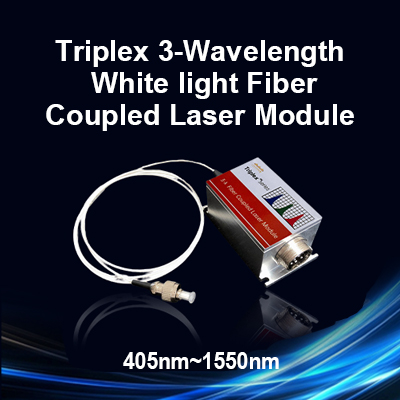
When sourcing from a diode laser supplier in China, it is essential to look for those who invest in “In-situ monitoring” during the epitaxial growth process. This technology allows for real-time adjustment of layer thickness and composition, ensuring that every wafer meets the stringent requirements of high-power applications. Furthermore, the ability to provide comprehensive test reports—including LIV curves, spectral plots, and far-field patterns—is the hallmark of a world-class manufacturer.
Q: What is the significance of “Fill Factor” in a laser diode bar?
A: The fill factor is the ratio of the total emitting width of the diodes to the total width of the bar. A higher fill factor allows for higher total power but makes thermal management more difficult due to the proximity of the emitters. As a laser diode manufacturer, we balance the fill factor to optimize brightness versus lifetime.
Q: Why is “Hard Solder” (AuSn) essential for high-power custom laser diode modules?
A: Hard solder has a high melting point and superior mechanical strength compared to “soft” Indium solder. This prevents “solder migration” and “thermal fatigue,” which are common failure modes in diodes that undergo frequent on/off cycles. It ensures that the alignment between the diode and the collimating optics remains stable over years of operation.
Q: How does a Diode Laser Supplier handle “Wavelength Binning”?
A: Due to slight variations in the epitaxial growth process, diodes from the same wafer may have slightly different center wavelengths. We “bin” these diodes into 1nm or 2nm increments. For customers with narrow-band requirements (e.g., Rb pumping at 795nm), binning is crucial to ensure that every custom laser diode module performs identically in the final system.
Q: Can a China laser diode factory provide customized housing for specific OEM requirements?
A: Yes. Customization extends beyond the diode itself to include the mechanical footprint, electrical connectors (e.g., SMA905, D-Sub), and the integration of specific optical elements like diffractive optical elements (DOEs) for pattern generation.
عند شراء مصادر ضوئية عالية الدقة، غالبًا ما يقتصر الاختيار بين الصمام الثنائي الليزري المزود بضفيرة ووحدة الليزر المقترنة بالألياف القابلة للفصل على مسألة التكلفة. ومع ذلك، بالنسبة لمهندس الأنظمة، فإن هذا القرار يتعلق بالاستمرارية...
عرض التفاصيلمقدمة: غرفة المحركات في طب الأسنان في مناقشتنا السابقة (هل تفتقد عيادتك لطبيب الأسنان إلى دقة الصمام الثنائي؟)، استكشفنا النتائج السريرية للجراحة بالليزر. ولكن بالنسبة لمهندسي الأجهزة الطبية وفنيي الطب الحيوي و...
عرض التفاصيللا يبدأ تطور وحدة الليزر الحديثة ليس بعدسة أو مبيت بل داخل الشبكة البلورية لأشباه الموصلات ذات فجوة الحزمة المباشرة. لفهم سبب تفوّق ليزر أشباه الموصلات الاحترافي على البدائل الاستهلاكية...
عرض التفاصيلعندما يسعى المهندس إلى شراء صمامات ليزر ثنائية الصمامات الثنائية الليزرية، غالبًا ما ينصب التركيز الفوري على ذروة الطاقة والطول الموجي. ومع ذلك، فإن المقياس الحقيقي لليزر الصمام الثنائي عالي الأداء هو معدل التدهور في ظل ظروف الحقن العالي. فهم فيزياء ...
عرض التفاصيل